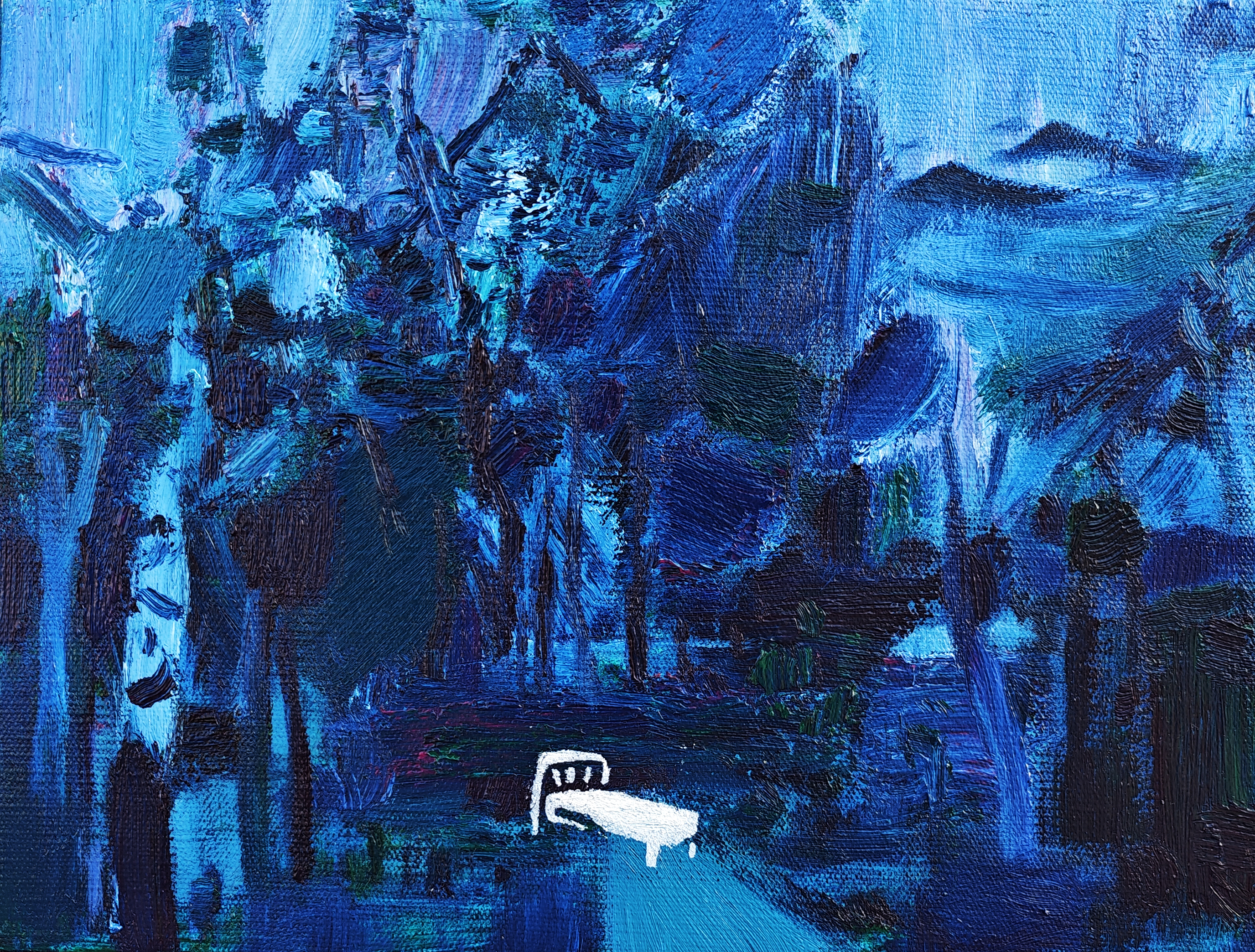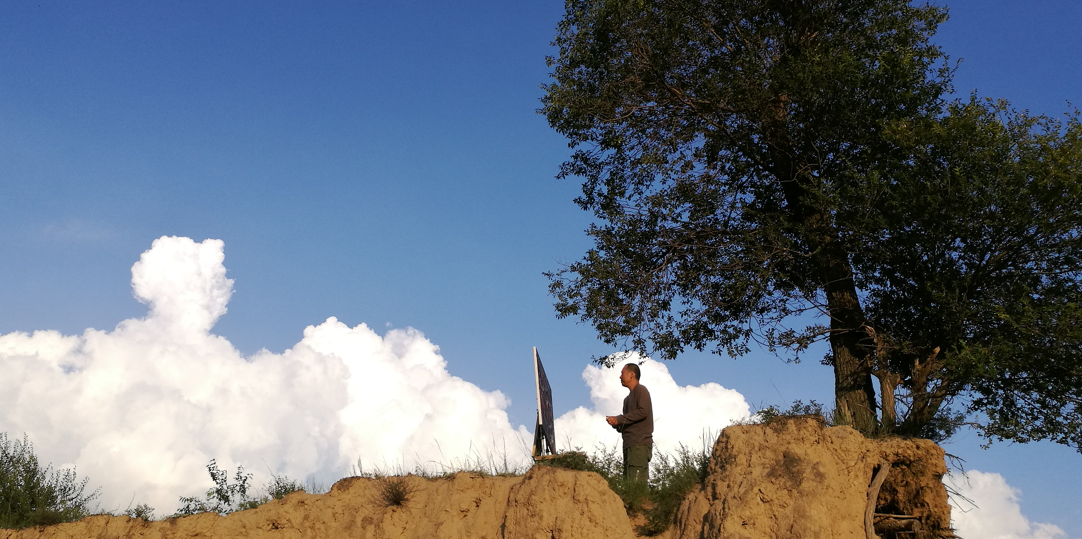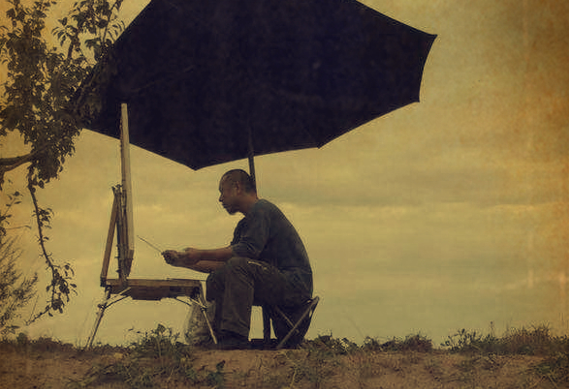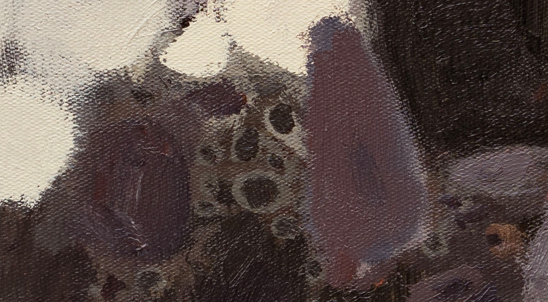
The longer I paint, the more I feel it: the truly hard thing is not painting something to look "like" — it is, in the moment the brush comes down, temporarily forgetting all the voices inside your head.
We so often walk up to the canvas carrying too much.
We think about how the masters would have painted it, about whether others will approve, about whether the composition is correct, whether the color is too risky, whether the brushwork looks mature enough — sometimes, before a single stroke is laid, we have already arranged in our minds exactly how the painting "should" look.
But the moment there are too many "shoulds," the painting begins to stiffen.
The hand paints, but the heart is not in the picture. The eyes see a tree, a cloud, a face, while the mind keeps up its comparisons: how did the masters handle this tree? How did my teacher paint clouds? Is this color too vulgar? Does this brushwork count as refined?
And so what appears on the canvas is no longer the world you truly saw, but a world already seen by others; no longer a feeling rising naturally from your own heart, but a "safe answer" — sifted, polished, and held back through layer upon layer.
Yet what is most precious in art is precisely not safety.
I often feel that painting is the most direct way for a person to face themselves. Every stroke you put down carries your breath, your hesitation, your excitement, your fear, your warmth. You can never truly imitate another person's lived feeling, nor can you ever wholly borrow someone else's eyes to see the world.
Learning matters, of course. We need to learn from teachers, from our predecessors, from great works. But learning is not so that you can become someone else — it is so that one day you can forget all those methods and return to your own eyes, your own hands, your own heart.
The Diamond Sutra says: "Dwell nowhere, and let the mind arise."
As I read it, in painting this means: do not cling to one manner of painting, do not take up residence inside some standard, do not take up residence inside other people's judgments of you. The mind may arise — but it need not be imprisoned by it. A painting may employ method — but it need not be held hostage by method.
When you are truly absorbed in painting, the best state is usually not "how should I paint this," but "what did I see, what did I feel."
Perhaps the pale yellow where the setting sun catches a gray wall; perhaps the way a tree sways softly in the wind; perhaps the back of a child on a village path; perhaps just an ordinary cabbage on the table. They do not need to be certified "meaningful" first, nor must they first measure up to some aesthetic standard. If it truly moves you, it deserves to be painted.
To paint without bringing your brain along is not to abandon thinking — it is to not let thinking crush feeling.
Truly good painting is rarely thought out; it grows slowly — out of looking, touching, pausing, breathing. It is sometimes incomplete, sometimes not beautiful, sometimes even clumsy — but as long as the real you is inside it, it will be alive.
As one who paints, I am more and more willing to believe this: the canvas is not for proving how much you know, but for letting yourself be revealed.
When we set down "what will others think," set down "how it ought to be painted," set down those thoughts that hurry toward success and hurry to be correct — only then does the more genuine self within slowly come into view.
Then painting is no longer a performance.
It is a way back to oneself.
Related: Selected works