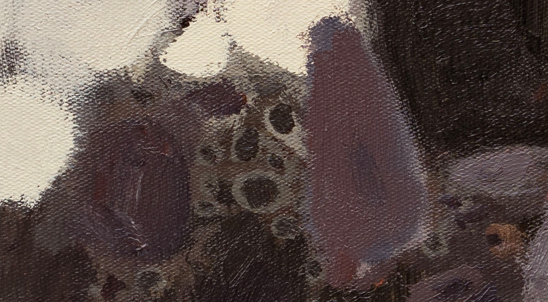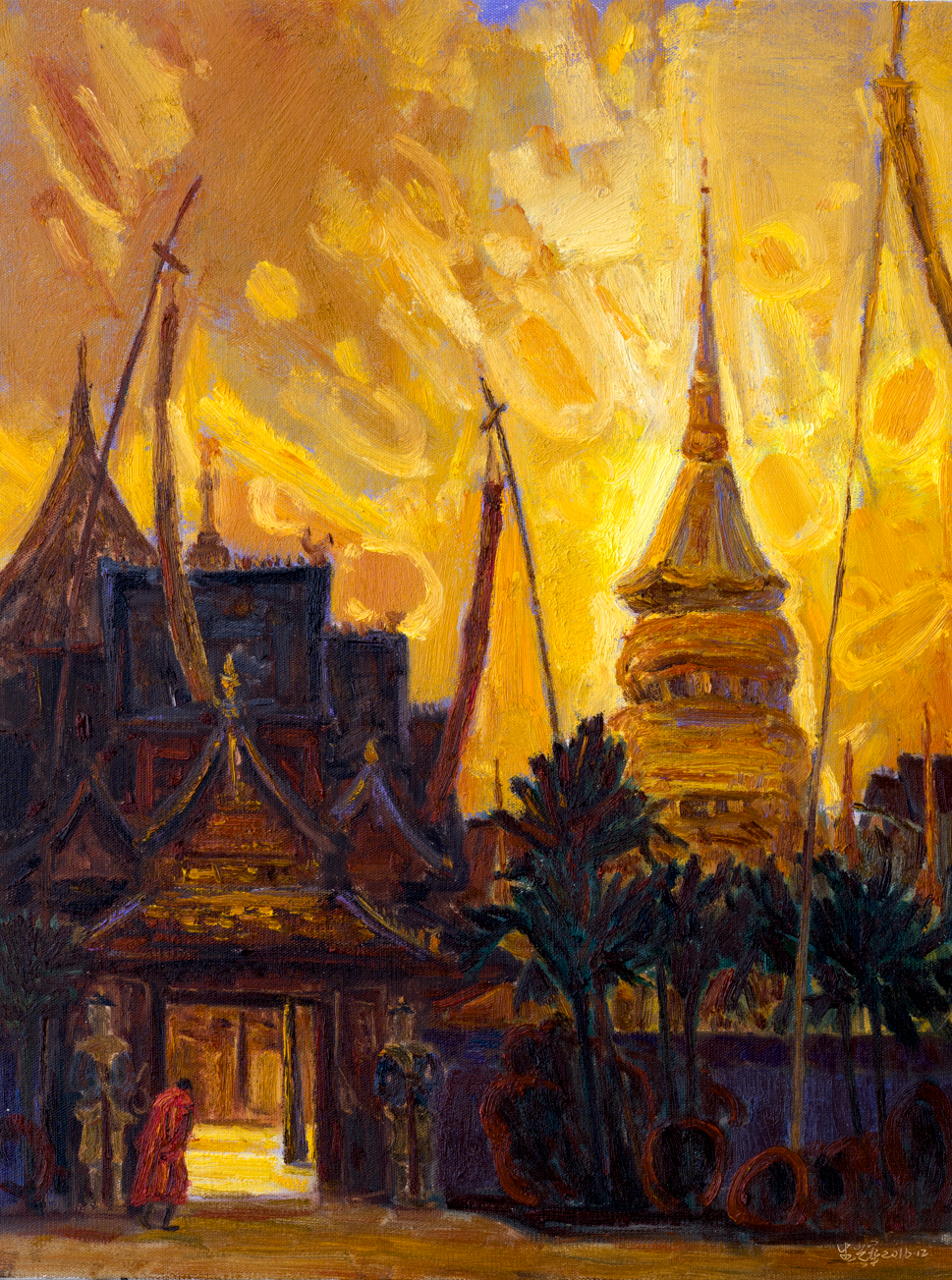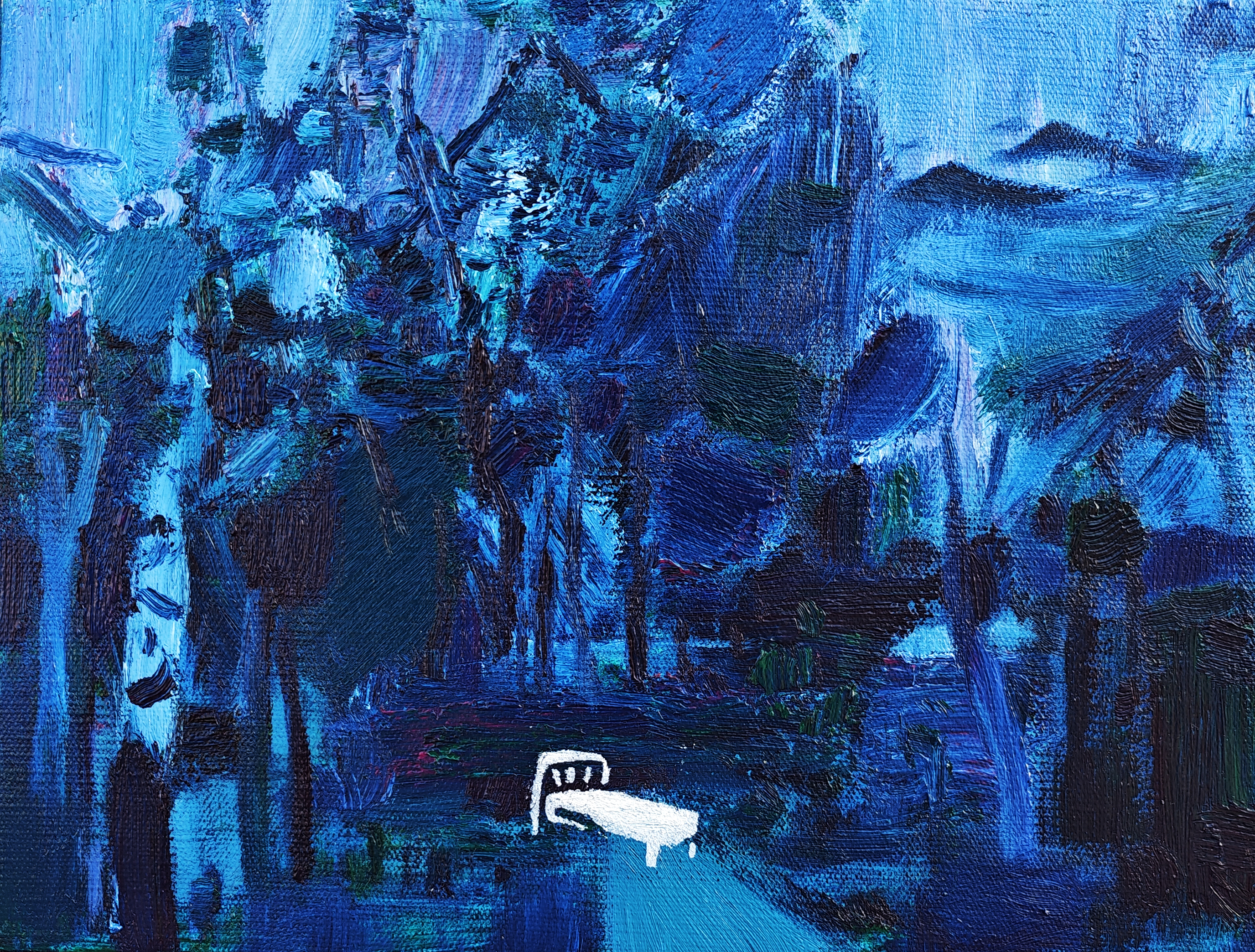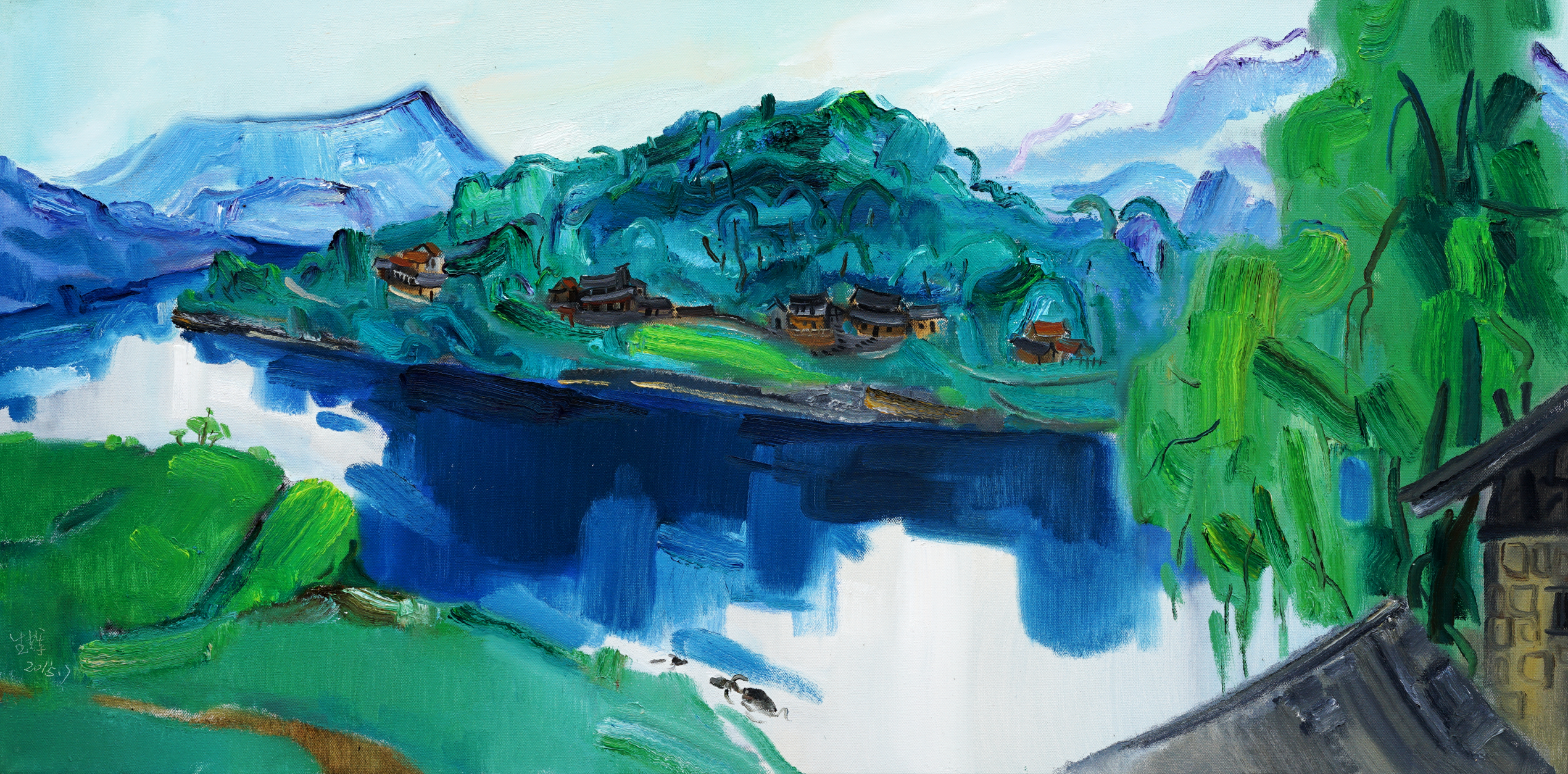
My first impression on seeing Brother Sheng Hui's oil paintings was stillness — and, permeating it, a distinct flavor of Zen. He might well be called a practitioner who paints. In today's worlds of traditional Chinese painting and oil painting alike, there are many artists who take Buddhist subject matter as their theme, but very few in whom a Buddha-nature truly comes alive inside the work itself.
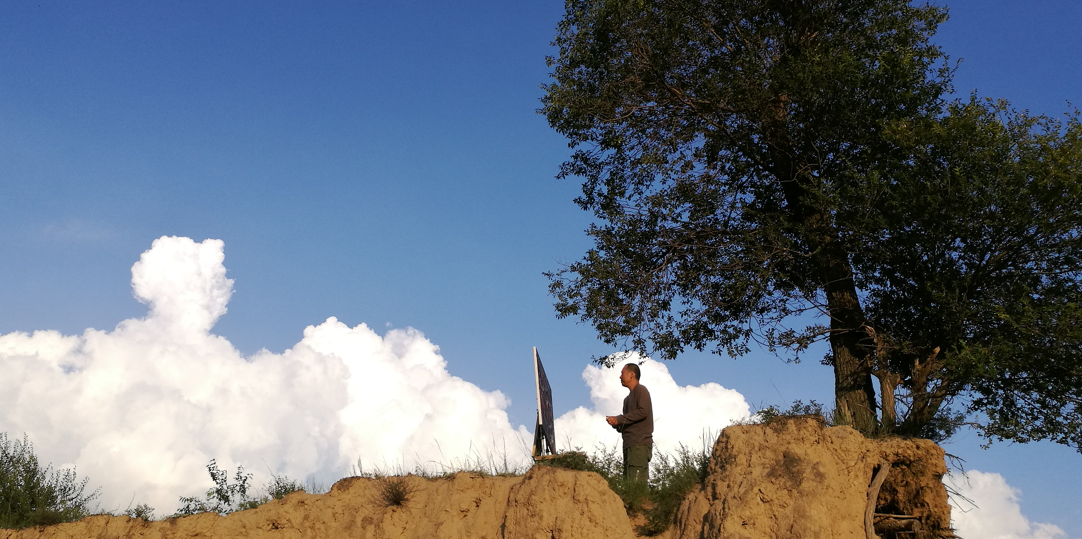
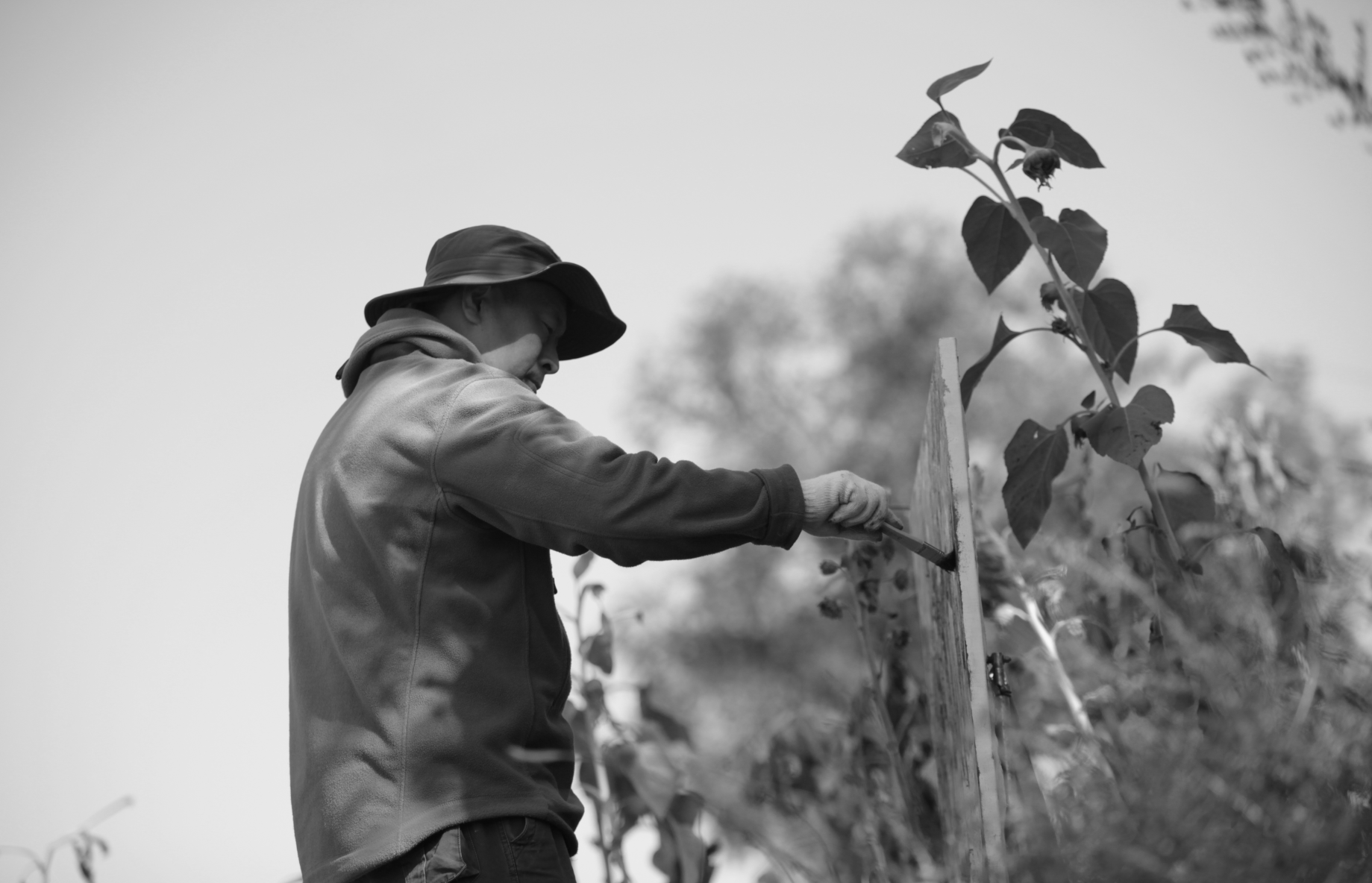
In this age of advanced transportation and information, painters have turned their love and attention toward nature, and plein-air painting activities are being held in every corner of the country. Fate has thus brought Brother Sheng Hui and me together several times now, both north and south, invited to paint side by side. In everyday life he is quiet, hardworking, and sparing with words — eager to learn and glad to take in the views and criticisms of others. He is like the cloth-sack monk of the martial-arts novels, sweeping the courtyard day after day: quiet, easygoing, inward. These three words are embodied in his work to the fullest.
Chan Buddhism speaks of:
"In the ten directions, no image lingers;
through the six realms, no trace of form.
Leap beyond the three worlds,
outside the five elements.
Each move higher than the last,
each step wider than before.
Sit straight through the gate of buddhas and patriarchs —
and lose the road by which you came."
In Sheng Hui's paintings, brushwork and color alike seem to convey a fusion of his understanding of painting with the spirit of Chan. He does not weigh the Dharma as high or low; rather, as a painter cultivating himself amid the marketplace, he gives expression to what he has seen, heard, and awakened to in nature.
Brother Sheng Hui's work also takes in the xieyi spirit of Chinese painting — its emphasis on expressive idea over mere likeness. He honors the Six Principles, attends to the transformations of brushwork and to qiyun, rhythmic vitality; intention comes first, and form follows as the brush comes down. Because intention leads, the work becomes ensouled of itself — which is why it is stillness that first enters the viewer's heart. His paintings are further endowed with a poetic realm: in them there is joy and sorrow, solitude and togetherness. Through his felt response to the real world around him and his seizing of it, he implants a singular, personal painterly temperament into his work. In the interplay of color masses and in composition, he seems casual yet is rigorous at heart — so the viewer first savors the meaning, and only then contemplates the craft. Learning never ends; the painter is a "practitioner." And here I wish Brother Sheng Hui still greater achievement and new breakthroughs on the painting road ahead.
By Yang Jiayong
April 2016
Related: Selected works